







漢學(xué)中西問 | 金在榮:荀子禮法思想的現(xiàn)代闡釋
2025-10-28 12:14:27
編者按:
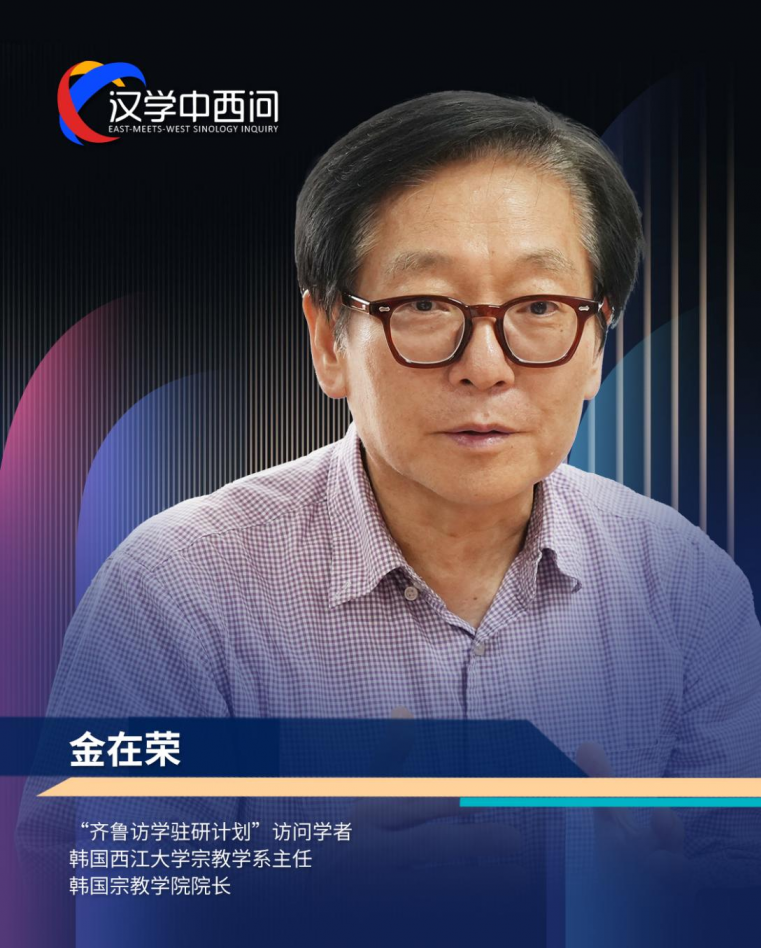
“禮法與秩序”——荀子思想國際學(xué)術(shù)研討會(huì)將于 2025年10月29日在山東蘭陵舉辦。會(huì)前,“齊魯訪學(xué)駐研計(jì)劃”訪問學(xué)者、韓國西江大學(xué)宗教學(xué)系主任、韓國宗教學(xué)院院長金在榮接受中國孔子網(wǎng)“漢學(xué)中西問”專訪,解讀荀子禮法思想在當(dāng)代社會(huì)治理、文明對話中的現(xiàn)實(shí)意義。
Q:Your residency research program focuses on the comparative study of Xunzi and William James. The two represent two typical theoretical paradigms in the Eastern and Western ideological traditions respectively. The former emphasizes "education through ritual and law", while the latter highlights "pragmatism". In your opinion, what resonance points exist in the core of their thoughts, and what essential differences do they present?
中國孔子網(wǎng):您的駐研計(jì)劃聚焦荀子與威廉?詹姆斯的比較研究,二者分別代表了東西方思想傳統(tǒng)中具有代表性的理論范式,前者注重“禮法教化”,后者強(qiáng)調(diào)“實(shí)用主義”,您認(rèn)為二者在思想內(nèi)核層面存在哪些共鳴點(diǎn),又呈現(xiàn)出怎樣的本質(zhì)差異?
ANS:Though Xunzi and James lived in differnt life context, their thoughts tended to reveal three commonalities. They both radically perceive experience as the foundation of theory or system of human life construction. For an expositon of reasonaiblity on our world, they attempted to understand and judge the experiential dimension of human life. They did not finish their inquiry on human experience in the phase of understanding and judging. Fruthermore, they tried to articulate the implementaion process of their understanding and judging as the final phase for the resolution of of diverse questions emerging in human life.
They thought that knowing process should be completed into the phase of implementation as doing. This is the distinct acme of their thoughts. They did not remain in an abstract theoretical level but pushed forward to implement or contest it in a life context whether it would operate properly for an authentic life development. In so doing, Xunzi reappropriated the value of ritual and law for the authentic operation of human activity. Similarly, James revalorized the practicality of human life. This point is eventually the momentum for him to begin to inquire a new thought, pragmatism.
The only key difference between them is about the scale for their thoughts. Xunzi is more concerned about the collectivivity of human life but James more about individuality about it. They can be complemented mutually for the further wholistic complehension of our human life and its conditions.
金在榮:盡管荀子與詹姆斯所處的生活語境不同,但其思想?yún)s呈現(xiàn)出三大共性。首先,二者都徹底將“經(jīng)驗(yàn)”視為人類生活建構(gòu)理論或體系的基礎(chǔ)。為闡釋世界的合理性,他們都試圖理解并評判人類生活的經(jīng)驗(yàn)維度。其次,他們對人類經(jīng)驗(yàn)的探究并未止步于理解與評判階段,而是進(jìn)一步闡明這些理解與評判的實(shí)踐過程,將其作為解決人類生活中各類問題的最終環(huán)節(jié)。
二者都認(rèn)為,認(rèn)知過程必須推進(jìn)到“行”的實(shí)踐階段才算完成,這是二者思想最顯著的精華部分。他們不滿足于停留在抽象的理論層面,而是將理論推向生活語境中去實(shí)踐、去檢驗(yàn),看其能否切實(shí)推動(dòng)真實(shí)生活的發(fā)展。正是基于此,荀子重新發(fā)掘了“禮”與“法”對人類活動(dòng)有效運(yùn)行的價(jià)值;同理,詹姆斯也重塑了人類生活“實(shí)用性”的重要性,而這一點(diǎn)正是他開創(chuàng)實(shí)用主義這一新思想的動(dòng)因。
二者唯一的核心差異在于思想關(guān)懷的范圍。荀子更關(guān)注人類生活的“群體性”,而詹姆斯則更側(cè)重“個(gè)體性”。二者可以相互補(bǔ)充,助力我們更全面地理解人類生活及其存在狀態(tài)。
Q:The modern transformation of traditional thoughts is a core issue concerned by the academic community. How do you balance the traditional core of Xunzi's thoughts and their modern interpretation in your research?
中國孔子網(wǎng):傳統(tǒng)思想的現(xiàn)代轉(zhuǎn)化是學(xué)界關(guān)注的核心議題,您在研究中如何處理荀子思想的傳統(tǒng)內(nèi)核與現(xiàn)代詮釋之間的平衡?
ANS:Xunzi’s thoughts are timely suggestive. His thoughts expose us a psycho-spiritual guide line. It is very worhwhile to pay attention to them in the world of AI. Avove all his thoughts would tell persuasively the indispensibility of struggling (suffering or painfulness) experience as one of key sources for the constrcutive understanding of human life. It should not be ignored or marginalized. It is the unchangelble condition of human life irrespective of the difference among regions, classes, genders, times and so on. It is constant in the East and the West and beyond wherever human life exists!It is a constantl human condition for the authentic improvement of human life. Without it, the true reality of human life will not be revealed.
The age of AI does tend to proclaim this struggling (suffering and painfulness) experience as one of the most useless things. Yes, it should not be slow to recognize the achievement of AI! It has done a great job solving many problems in our current human life. Nevertheless, it is time to reflect the Xunzian virtue of “humility” in the age of AI. It is really time to listen to the silent witness of human histoy that any human life cannot avoid encountering the human struggling experience in its journey in this glove.
金在榮:荀子的思想具有鮮明的時(shí)代啟示意義,為我們提供了心靈精神層面的指引,在人工智能時(shí)代尤其值得關(guān)注。最具說服力的一點(diǎn)是,荀子的思想闡明了“奮斗(苦難或痛苦)經(jīng)驗(yàn)”作為建構(gòu)性理解人類生活的關(guān)鍵源泉之一,具有不可替代性。這種經(jīng)驗(yàn)不應(yīng)被忽視或邊緣化,它是人類生活的恒定條件,不受地域、階層、性別、時(shí)代等差異的影響。無論在東方還是西方,無論人類生活在何處,它都普遍存在,是人類實(shí)現(xiàn)真實(shí)自我提升的永恒前提。缺少這一經(jīng)驗(yàn),人類生活的真實(shí)本質(zhì)便無從彰顯。
人工智能時(shí)代往往將這種奮斗(苦難與痛苦)經(jīng)驗(yàn)視為無用。誠然,我們不應(yīng)忽視人工智能所取得的成就,它確實(shí)為解決當(dāng)下人類生活的諸多問題作出了巨大貢獻(xiàn)。但與此同時(shí),在人工智能時(shí)代,我們亟需重拾荀子所倡導(dǎo)的 “謙遜” 之德,亟需聆聽人類歷史的無聲見證。人生在世,注定無法回避奮斗的歷程。
Q:The International Symposium on Xunzi's Thoughts will be held in Lanling, Shandong on October 29. This grand event has gathered well-known scholars in relevant fields at home and abroad. At the symposium, what phased achievements or core viewpoints on the research of Xunzi's thoughts will you focus on sharing?
中國孔子網(wǎng):荀子思想國際學(xué)術(shù)研討會(huì)將于10月29日在山東蘭陵召開,此次盛會(huì)匯聚了海內(nèi)外相關(guān)領(lǐng)域的知名學(xué)者。在研討會(huì)上,您將重點(diǎn)分享哪些關(guān)于荀子思想研究的階段性成果或核心觀點(diǎn)?
ANS:Personally I am very honored to participate in this important conference. I am going to share my limited research materials in the conference. As you may know, the Joseon Dynasy was maintained for almost more than 500 years (1392-1910) within the framework of Confucian Ideology. As a Korean humble academician, I have a qurioisty why it was collapsed. What was the real problem in the Dynasty? Diverse scholars would have attempted to inquire about them. Whenever I read their researches, I felt something missing though I did not knwo what it would be. Vaguely I felt it. This is my first concern about Xunzi’s thoughts.
In this conference I will attempt to identify the key problem of Joseon Dynasty in relation to Xunzi’s perspective. From the early period of Joseon Dystany, it would be established on the basis of the Neo-Confucian Ideology. The more it would evolve, it would be further emphasied on the ideolgy in every relams of the Dynasty. Nevertheless the reality of the Joseon Dynasty would not correspond fully to the imlication of its main Ideology. Eventually it began to expose radically the discrepancy between the reality of Joseon Dynasty and its Ideology. This discrepancy would be a starting stage for the Dynasty to be collapsed. The dilution state of Aristocrats’ and other classes’ spirit on grapping on the Confucian Ideology in the Dynasty was eventually formed.
If the alternative ideological frame work like the case of Xunzi would be complemented in the Dynasty, the fate of the Dynasty would be very different. But is it posible for Xunzi’s perspective to be adopted as the key ideological source of the Dynasty in the situation of regarding him as a “heretic”? I will share about this hypothetical issue in the conference.
金在榮:我個(gè)人深感榮幸能參與此次重要會(huì)議,并將在會(huì)上分享自己研究淺見。眾所周知,朝鮮王朝(1392-1910 年)以儒家思想為框架存續(xù)了近 500 余年。作為一名韓國學(xué)者,我一直對其滅亡的原因充滿好奇:這個(gè)王朝真正的問題出在哪里?許多學(xué)者都曾對此展開探究。我在研讀這些研究成果時(shí),總感覺有所欠缺,雖一時(shí)難以明確,但這種直覺始終存在。這便是我關(guān)注荀子思想的最初契機(jī)。
在此次會(huì)議上,我將嘗試從荀子思想的視角剖析朝鮮王朝滅亡的核心問題。朝鮮王朝建立之初便以新儒家思想(理學(xué))為根基,且隨著王朝發(fā)展,這一思想在社會(huì)各個(gè)領(lǐng)域的滲透不斷加深。然而,王朝的現(xiàn)實(shí)狀況卻與主流思想的內(nèi)涵嚴(yán)重不符,最終導(dǎo)致思想與現(xiàn)實(shí)的矛盾徹底爆發(fā)——這正是王朝走向覆滅的開端。此后,無論是貴族階層還是其他社會(huì)階層,對儒家思想的堅(jiān)守精神逐漸淡化。
我不禁思考:若當(dāng)時(shí)朝鮮王朝能以荀子思想作為替代性的思想框架,對主流思想進(jìn)行補(bǔ)充,其命運(yùn)是否會(huì)截然不同?但問題在于,在荀子被視為 “異端” 的社會(huì)背景下,其思想是否有可能成為王朝的核心思想來源?我將在會(huì)議上圍繞這一假設(shè)性問題展開分享。
Q:With "ritual, Law and Order" as its core theme, this seminar not only echoes the core essence of Xunzi's thoughts but also closely aligns with the practical needs of contemporary social governance. How do you understand the theoretical value and contemporary significance of this theme?
中國孔子網(wǎng):本次研討會(huì)以“禮法與秩序”為核心主題,既呼應(yīng)了荀子思想的核心要義,也緊扣當(dāng)代社會(huì)治理的現(xiàn)實(shí)需求。您如何理解這一主題的理論價(jià)值與時(shí)代意義?
ANS:Yes, the conference theme, “Ritual, Law and Order” is very relevant to the implementation of contemporary social governance. These three items are not separated but more intertwined and mutually intersperced. Ritual cannot exist without Law and Order. The others would be the same. Xunzi’s case would be very unique for the exposition on the relationship among these three items. In his thoughts, Ritual is not only the source of Law and Order but also expressions of Law and Order in the performing process of Ritual. Ritual cannot be properly or farely implemented without the assistance of law and order. Law and Oder cannot be sustained lively without the ongoing performance of Ritual. They are all circulatively interacting and sustaning each other. This is ongoing process throgh which all human societies could be not only sustained lively but also flourished abundantly.
金在榮:是的,“禮法與秩序” 這一會(huì)議主題與當(dāng)代社會(huì)治理的實(shí)踐需求高度契合。“禮”“法”“秩序”三者并非相互割裂,而是緊密交織、相互滲透的關(guān)系。禮的存在離不開法與秩序,法與秩序的存在同樣也離不開禮。荀子對三者關(guān)系的闡釋極具獨(dú)特性。在他的思想中,禮不僅是法與秩序的源頭,在禮的踐行過程中,也蘊(yùn)含著法與秩序的內(nèi)涵。若無法律與秩序的支撐,禮便無法得到恰當(dāng)、公正的推行;反之,若缺乏禮的持續(xù)踐行,法律與秩序也難以保持活力。三者形成循環(huán)互動(dòng)、相互維系的關(guān)系,正是通過這一動(dòng)態(tài)過程,人類社會(huì)才能實(shí)現(xiàn)存續(xù)與繁榮。
Q:As the hometown of Xunzi, Lanling has deeply explored Xunzi's thought of "Emphasizing rites and law" by integrating it with village conventions, thus developing a new path for rural governance that conforms to local realities. From the perspective of religious psychology, is there a mutually reinforcing psychological mechanism between the people's recognition of "ritual" and their compliance with "law"? What reference value does this psychological mechanism hold for rural governance and even grassroots social governance?
中國孔子網(wǎng):作為荀子故里,蘭陵深度挖掘荀子“隆禮重法”思想,與村規(guī)民約緊密融合并付諸實(shí)踐,開拓出契合本地實(shí)情的鄉(xiāng)村治理新路徑。從宗教心理學(xué)視角來看,民眾對“禮”的認(rèn)同與對“法”的遵守之間,是否存在相互促進(jìn)的心理機(jī)制?這種心理機(jī)制對鄉(xiāng)村治理乃至基層社會(huì)治理有何借鑒價(jià)值?
ANS:As I mentioned in the above, rites and law cannot exist respectively without other. They are all the times intertwined and interrelated. Rites are the healthy resources for law to be implemented more harmoniously or properly. Law cannot exist humanely or farefully if it would not be related to rites. Law should be checked about itself with the assistance of rites whether it would forget the fundamental value or purpose of its existence for human life. At the same time, rites should also be checked whether they would be adquately performed in relation to the proceedure.
Generallly rites and law would be rooted into the human’s relation to the world of spirits beyond this world. But, in the case of Xunzi, the meaning of rites and law are profoundly fresh and differnt. He did not have much interest whether rites and law would be related to the world of spirits and its influence to the human world. His keen concern is the affective function of rites and law themselves in the human life. Especially, he paid attention to the emotional dimension with that the proceedure of rites and law would stimulate or touch regularly the inner aspect of human life. The human life in community, whether it would follow the transcendent or not, needs “a washing or healing place” for the resolution of diverse anxieties and difficuties in the commuity participant’s mind and heart.
In this sense, Xunzi’s insights are explicity relevant to the context of village. Rites and law are the foundational value for the flourshing of village life and its sustenance. Rites and law should not be perceived as the past or the season-off components but as the living fountain revealing still a distinct efficasy even in the contemporary governance of the villiage life. Actually if they function well, they are the champion markers for the sound and healthy governance of the village life. The only difference between the living village and the dead depends upon the magnitude of emotional touch that rites and law stimulate to the members of the villiage for the bonding sustenance of their community. In other words, the living village itself is spiritual/religious community emboding solidarity and fraternity!
金在榮:如我之前所言,禮與法相輔相成,始終相互交織、密不可分。禮是法律得以更和諧、更恰當(dāng)推行的有益助力;若脫離禮的精神,法的推行便難以體現(xiàn)人文關(guān)懷與公平正義。法需要借助禮的精神來審視自身,避免偏離其為人類生活服務(wù)的根本價(jià)值與目的;與此同時(shí),禮的踐行也需要依據(jù)法的規(guī)范流程進(jìn)行檢驗(yàn)。
通常而言,禮與法的根源可追溯至人類與超驗(yàn)精神世界的關(guān)聯(lián),但荀子對禮與法的闡釋卻呈現(xiàn)出全新的深刻內(nèi)涵。他并不關(guān)注禮與法是否與精神世界相關(guān)聯(lián),以及這種關(guān)聯(lián)對人類世界的影響,而是聚焦于禮與法本身在人類生活中所發(fā)揮的情感功能。他尤其注重禮與法的踐行過程,認(rèn)為這一過程能持續(xù)觸動(dòng)人類內(nèi)心的情感層面。無論是信奉超驗(yàn)力量與否,社群生活中的個(gè)體都需要一個(gè) “凈化與療愈的空間”,以消解內(nèi)心的焦慮與困境。
從這個(gè)角度而言,荀子的思想與鄉(xiāng)村治理語境高度契合。禮與法是鄉(xiāng)村存續(xù)與繁榮的核心價(jià)值根基,不應(yīng)被視為過時(shí)或階段性的元素,即便在當(dāng)代鄉(xiāng)村治理中,它們依然具有鮮活的生命力與獨(dú)特效用。事實(shí)上,若禮與法能充分發(fā)揮作用,便是鄉(xiāng)村治理健康有序的最佳標(biāo)志。鄉(xiāng)村是充滿活力還是停滯僵化,關(guān)鍵在于禮與法對村民情感的觸動(dòng)程度——這種觸動(dòng)維系著社群的凝聚力。換言之,富有活力的鄉(xiāng)村本身就是一個(gè)蘊(yùn)含團(tuán)結(jié)與友愛精神的精神社群。
Q:As an important spiritual resource in the East Asian cultural circle, Xunzi's thoughts also exert a profound influence on Korean society. Combining the cultural context of South Korea, could you talk about whether Xunzi's thoughts have extended from the field of academic research to the levels of folk life and social governance? In your view, which core concepts in Xunzi's thoughts can provide practical and effective theoretical support and practical paths for contemporary local governance?
中國孔子網(wǎng):荀子思想作為東亞文化圈的重要精神資源,在韓國社會(huì)也有著深遠(yuǎn)影響。您能否結(jié)合韓國的文化語境,談?wù)勡髯铀枷胧欠褚褟膶W(xué)術(shù)研究領(lǐng)域延伸至民間生活與社會(huì)治理層面?在您看來,荀子思想中的哪些核心理念能夠?yàn)楫?dāng)代地方治理提供切實(shí)有效的理論支撐與實(shí)踐路徑?
ANS:Xunzi’s thoughts are not sufficiently researched yet in Korea. Xunzian scholars are not main stream of Confucianism according to my understanding. Relatively they are very few comparing to the Mongzian and other scholars. However, recently young schoalrs trained in Korea or other foreign academic institures are begining to pay attention actively to the importance of Xunzi’s thoughts in contemporary society. Their methodological issues and theoretical perspectives are quite diverses. Some are explicitly expositing it in terms of analytical philosophy and some more comparatively in relation to the various displines such as religious studies, philosophy, history, literature, education, psychology, politics, social welfare, of humanities and social sciences.
Personally I have thought that Xunzi’s thoughts should be seriously revalorized in the contemporary scholarship of Confucianism in Korea. One thing should be revisited in Xinzi’s thoughts. The most important one is the resotoration of the ritual dimension in contemporary civil society. To Xunzi, ritual is not one of necessary components for the sustenance of the human life and its community. It is not only the foundation of other components but also a spiritual matrix for the flurishing human life and its community. It provides a higher view point or platform for the self-correction process of the human life and its community. Still these insights in Xunizi’s thoughts would be valuable in contemporary society in Korea!
金在榮:目前,荀子思想在韓國的研究尚不充分。在我看來,韓國儒學(xué)研究界中,荀子研究學(xué)者并非主流,與孟子及其他儒家學(xué)者的研究者相比,數(shù)量相對稀少。不過,近年來,一批在韓國本土或海外學(xué)術(shù)機(jī)構(gòu)接受過訓(xùn)練的青年學(xué)者,開始積極關(guān)注荀子思想在當(dāng)代社會(huì)的重要價(jià)值,他們的研究方法與理論視角也呈現(xiàn)出多元化特征:部分學(xué)者運(yùn)用分析哲學(xué)的方法對荀子思想進(jìn)行闡釋,另有學(xué)者則將其與宗教學(xué)、哲學(xué)、歷史學(xué)、文學(xué)、教育學(xué)、心理學(xué)、政治學(xué)、社會(huì)福利等人文社科領(lǐng)域的不同學(xué)科進(jìn)行比較研究。
我個(gè)人認(rèn)為,在當(dāng)代韓國儒學(xué)研究中,荀子思想的價(jià)值亟待重估,其中最值得關(guān)注的一點(diǎn),便是在當(dāng)代公民社會(huì)中重建 “禮” 的維度。在荀子看來,禮不僅是維系人類生活與社群存續(xù)的必要元素,更是其他一切社會(huì)元素的根基,是人類生活與社群實(shí)現(xiàn)繁榮的精神母體。它為人類生活與社群的自我修正提供了更高層面的視角與平臺(tái)。即便在當(dāng)代韓國社會(huì),荀子的這些思想洞見依然具有重要價(jià)值。
Q:The academic community generally holds that Xunzi's thoughts possess prominent practicality and strong practical guiding significance. How do you view the potential of this trait for cross-civilization communication in the context of globalization? Combining your academic practice of promoting the integration of Korean and East Asian themes into the global discourse, in which aspects do you think efforts should be strengthened in the interpretation and dissemination of Xunzi's thoughts to make them an important topic in global academic dialogue?
中國孔子網(wǎng):學(xué)界普遍認(rèn)為荀子思想具有突出的實(shí)踐性、極強(qiáng)的現(xiàn)實(shí)指導(dǎo)性。您如何看待這種特質(zhì)在全球化背景下的跨文明傳播潛力?結(jié)合您推動(dòng)韓國及東亞主題融入全球話語的學(xué)術(shù)實(shí)踐,您認(rèn)為荀子思想要成為全球?qū)W術(shù)對話的重要議題,需在哪些方面加強(qiáng)闡釋與傳播?
ANS:I think that Xunzi’s thoughts would be contributing two things for cross-civilization communication in our current times. First of all, they warn us not to fall into the disputes of the abstract conceptualism for the development of cross-civilization communication skills or grammers. Instead, his thoughts suggested a realistic priciple that cross-civilization communication should be fundamentally based upon the awarnesse to our common humanity and its real experience irrespective of the difference of cultures and belief systems. In this sense, Xunzi was reasonable and rational. Second, his thoughts did not emphasize the normativity of classicalism ignoring its contextual sensibilities and its application into others. This aspect would be a good guideline for the implementaion of a skillful dialogic grammer in one’s involvement with cross- civilization communication with others.
Concerning about the interpretaion and the dissemination of Xunzi’s thoughts in a global academic community, I think the most distintive part of his thoughts would be the emotional efficacy of rituals to the human subjects and their communities. This point should be expanded deeply on the basis of the critical examination on his works. In additon, it should be compared to contemporary reseaches on ritual and emotion. In this comparision, Xunzi’s creative insights would be further discovered. The more we compare his thoughts to contemporary researches, the more we come to realize that Xunzi would be one of the ancient defending champions even on our contemporary academic “ring.”
金在榮:我認(rèn)為,在當(dāng)下的文明交流互鑒中,荀子思想可發(fā)揮兩方面的重要作用。首先,它警示我們,在構(gòu)建文明交流的方法與規(guī)范時(shí),不應(yīng)陷入抽象概念的爭論。荀子思想提出了一條現(xiàn)實(shí)原則:無論文化與信仰體系存在何種差異,文明交流的根本基礎(chǔ),應(yīng)是對人類共同本質(zhì)及其真實(shí)經(jīng)驗(yàn)的認(rèn)知。從這一角度而言,荀子的思想體現(xiàn)出理性與合理性。其次,荀子思想不推崇脫離現(xiàn)實(shí)語境、忽視應(yīng)用價(jià)值的古典規(guī)范主義,這一點(diǎn)可為開展靈活有效的文明對話提供重要指引。
關(guān)于荀子思想在全球?qū)W術(shù)界的闡釋與傳播,我認(rèn)為其最獨(dú)特的價(jià)值在于“禮”對個(gè)體及社群所產(chǎn)生的情感效用。我們應(yīng)在深入研讀荀子著作的基礎(chǔ)上,對這一觀點(diǎn)進(jìn)行深度拓展,并將其與當(dāng)代關(guān)于禮儀與情感的研究成果進(jìn)行比較。通過這種比較,荀子思想中的創(chuàng)新性洞見將得到進(jìn)一步發(fā)掘。我們對二者的比較越深入,就越能意識(shí)到:即便在當(dāng)代學(xué)術(shù)“競技場”上,荀子依然是古代思想家中的佼佼者。
Q:Against the backdrop of current civilizational conflicts and order reconstruction, what unique theoretical value do the humanistic nature of "rule by ritual" and the normative nature of "rule of law" have for the coexistence among civilizations? What enlightenment do they offer for solving the problems of "value conflicts" and "lack of rules" in global governance?
中國孔子網(wǎng):在當(dāng)前文明沖突與秩序重構(gòu)的背景下,“禮治”的人文性與“法治”的規(guī)范性,對文明間共處有何獨(dú)特理論價(jià)值?對解決全球治理中的“價(jià)值沖突”與“規(guī)則缺失”問題,又具有怎樣的啟示作用?
ANS:Ritual and law are very necessary for the sustenance of the human society. It does not matter whether it would be small or big. Every human society would have been evolved in accordance with the “ruling by ritual” and the “rule of law”. They are fudamental backbones for the flourshing development of our human society. In analogy, the function of “ruling by ritual” is like that of mother. It plays an archetypal role to restore or nurture the frail part of the human society. At the same time, the human society needs the “rule of law” for the implementation of its justice and fairness . Its role is like that of father. It is more concerned about fair judgment and decision rather than the mothering of the human society.
For the healty society,the “ruling by ritual” and the “rule of law” should be functioned properly. If the former would be too much emphasized, the society could not overcome its challenges concretely. In reverse, if the latter would be emphasized, the society would be like a harsh, cold battleground losing our humanity. Recently our current world expose a live testmony about it! In the name of justice and fairness, so many ugly things happens.
In this unbalansed situation, it seems to be very conventional to hear the phrases of “ rule of law” in the diverse daily news and social media covering political agenda, global conflics, international relations, trade war and so on. However, it is very rare to hear about the phrases of the “ruling by ritual”in world news and social media.
The proprtionality of the two pillars have been extremely unbalanced. The fathering dimension of the “rule of law” is thickly spreading in our contemporary world. Meanwhile, the mothering dimensioin for the restoration of the fraility of our human condition would have been weakened in our global world excep for a few cases. If this dimension would not be fully recovered, it would not be possible to materialize our human solidarity for the implementaion of the global governance. It is really high time to reappropriate this dimension!
金在榮:禮與法是維系人類社會(huì)存續(xù)的核心要素,無論社會(huì)規(guī)模大小,任何人類社會(huì)的演進(jìn)都離不開“禮治”與“法治” 的共同作用——二者是人類社會(huì)實(shí)現(xiàn)繁榮發(fā)展的根本支柱。若以比喻說明:“禮治”的功能如同母親,扮演著原型性角色,負(fù)責(zé)修復(fù)與滋養(yǎng)社會(huì)脆弱的部分;而“法治”則承擔(dān)著維護(hù)社會(huì)公平正義的職責(zé),其功能如同父親,更側(cè)重于作出公正的評判與決策,而非對社會(huì)進(jìn)行“滋養(yǎng)”。
一個(gè)健康的社會(huì),需要“禮治”與“法治”的協(xié)同發(fā)力、均衡運(yùn)作。若過度強(qiáng)調(diào)“禮治”,社會(huì)將難以切實(shí)應(yīng)對各類挑戰(zhàn);反之,若一味偏重 “法治”,社會(huì)將淪為冰冷嚴(yán)苛的 “戰(zhàn)場”,喪失人文溫度。當(dāng)下的世界正印證著這一點(diǎn):在 “公平正義” 的名義下,諸多丑惡現(xiàn)象不斷上演。
在這種失衡的格局下,“法治”一詞頻繁出現(xiàn)在各類新聞報(bào)道與社交媒體中,涉及政治議題、全球沖突、國際關(guān)系、貿(mào)易爭端等諸多領(lǐng)域;而 “禮治” 一詞卻在國際輿論場中極為罕見。
這兩大支柱的平衡已被嚴(yán)重打破:“法治”所代表的“父性” 維度在當(dāng)代世界不斷擴(kuò)張,而“禮治”所代表的、用于修復(fù)人類生存脆弱性的“母性”維度,除少數(shù)地區(qū)外,在全球范圍內(nèi)已大幅弱化。若這一維度無法得到充分恢復(fù),人類便難以凝聚共識(shí),全球治理的目標(biāo)也無從實(shí)現(xiàn)。當(dāng)下,正是重拾 “禮治” 維度的關(guān)鍵時(shí)刻!
【編輯:張曉芮】
文章、圖片版權(quán)歸原作者所有,如有侵權(quán)請聯(lián)系刪除- 蔡先金:黑格爾哲學(xué)史視域下的孔子評判的評判——以《哲學(xué)史講演錄》文本為基礎(chǔ)
- 蔡先金:黑格爾哲學(xué)史視域下的孔子評判的評判——以《哲學(xué)史講演錄》文本為基礎(chǔ)
- 當(dāng)千年漕船駛?cè)搿皵?shù)字星海”
- 齊魯大地吹拂文化“兩創(chuàng)”新風(fēng)
- 讓文化創(chuàng)新創(chuàng)造活力在中華大地持續(xù)迸發(fā)
- 文化“兩創(chuàng)” 時(shí)代華彩
- 蔡先金:黑格爾哲學(xué)史視域下的孔子評判的評判——以《哲學(xué)史講演錄》文本為基礎(chǔ)
- 蔡先金:黑格爾哲學(xué)史視域下的孔子評判的評判——以《哲學(xué)史講演錄》文本為基礎(chǔ)
- 尼山講堂丨楊傳召:《中庸》通講(三)
- 習(xí)近平同法國總統(tǒng)馬克龍?jiān)诔啥歼M(jìn)行友好交流,從都江堰治水之道悟治理之道 有文化自信的民族,才能立得住站得穩(wěn)行得遠(yuǎn)
- 當(dāng)千年漕船駛?cè)搿皵?shù)字星海”
- 齊魯大地吹拂文化“兩創(chuàng)”新風(fēng)